
![Original[2].png](https://static.wixstatic.com/media/9fd50e_26eeaa0ca552409fb16b24a34cc722bc~mv2.png/v1/crop/x_0,y_2125,w_5000,h_751/fill/w_425,h_64,al_c,q_85,usm_0.66_1.00_0.01,enc_avif,quality_auto/Original%5B2%5D.png)
Crowton Limit vs. Singularity — A Deeper Dive: By Richard Lee Crowton | Published: 10th July 2025
- richardcrowton
- Jul 10, 2025
- 2 min read
Updated: Jul 13, 2025

The Problem With the Singularity
In traditional physics, when a massive star collapses beyond a critical threshold, it forms a black hole — and at the center of that black hole lies a singularity: a point of infinite density, infinite curvature, and zero volume.
There’s just one issue:Infinities don’t belong in physics.
The singularity is a breakdown in the equations — a red flag that we’re missing something deeper. It doesn’t explain what happens to matter, where information goes, or how cosmic structure persists so elegantly in spite of such apparent chaos.
That’s where Crowton’s Cosmogenic Field Theory (CCFT) offers a radical alternative.
Introducing the Crowton Limit
The Crowton Limit replaces the singularity with a physical, thermodynamic boundary — a measurable point at which collapsing matter reaches a threshold where entropy and curvature invert.
At this limit, the matter doesn’t crush to a point — it transitions into the Transfer Interface Field (TIF), redirecting its information and energy into the fabric of the universe.
The Singularity:
Implies breakdown
Offers no testable predictions
Leads to loss of information
Violates thermodynamic continuity
The Crowton Limit:
Is a calculable threshold
Predicts regenerative transfer
Preserves and redistributes information
Aligns with entropy–curvature feedback systems
Why This Matters
The Crowton Limit restores continuity where general relativity breaks down. It:
Eliminates the need for infinite density
Enables testable, observable outcomes
Provides a mechanism for matter regeneration
Fits naturally with quantum principles like entanglement and decoherence
Supports observable cosmology, such as early nebula formation and galactic symmetry
In this model, black holes don’t end the story — they turn the page.
Real-World Evidence for the Crowton Limit
Planck-scale gravitational echoes suggest internal black hole structure
JWST findings show galaxies forming before expected — a key prediction of CCFT
Symmetric outflows and jets indicate structured internal dynamics, not collapse chaos
Cold outer planets and baryon asymmetries may be remnant flows from TIF processes
Theoretical Equation
The Crowton Limit is defined by:
ΔS / ΔR = γ<sub>crit</sub>
Where:
ΔS = entropy change
ΔR = curvature gradient
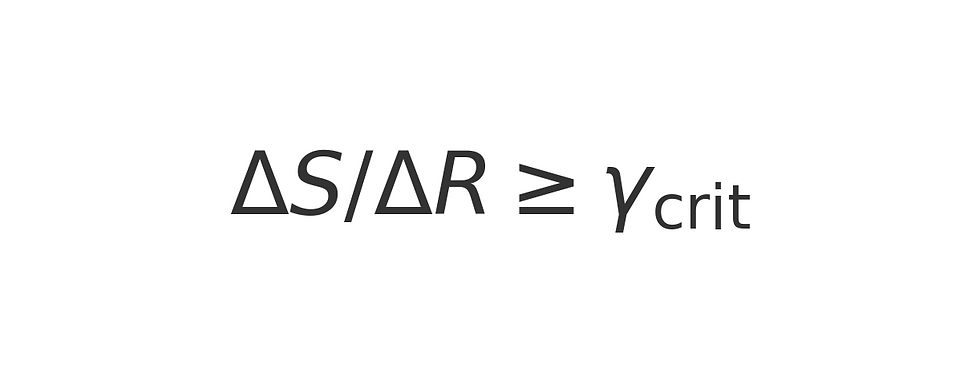
= critical tipping constant for field transition
Once this ratio is reached, the system flips from gravitational collapse into TIF-based transfer — matter doesn’t die, it re-enters the cosmic field.
Philosophical Edge
The singularity is a wall. The Crowton Limit is a mirror — one side reflects collapse, the other reflects creation.
In this sense, CCFT restores a deeper sense of order, balance, and continuity to cosmology — something far more elegant than a blind void of infinities.
Final Thoughts
The singularity has been a placeholder — a silent admission that current theories hit a limit.The Crowton Limit, on the other hand, offers a way forward. It bridges thermodynamics, curvature, entropy, and structure — not just to fix the equations, but to reveal the regenerative logic of the cosmos.
And perhaps most importantly: it’s testable, visual, and falsifiable. Which means its time has come.
Read Next:
Can the Universe Think? The Deeper Implications of CCFT
CCFT in the Context of Quantum Entanglement
Why the TIF May Redefine Astrophysics in the Next 10 Years


Comments